

The root of the problem is that we have been conditioned to consume. Shopping is an American pastime. Advertisers have become so adept at convincing us we need their products that we no longer question them.
They prey on your fears. Your home is not safe without one. (Even though we lived safely without it for centuries.)
They play on your insecurities. Everybody else has one. (You won’t measure up without it.)
They appeal to your ego. You have enough money to buy one, and you are important enough to own one. (Even if you don’t really need one.)
Necessities vs. Niceties
Relentless advertising coupled with improved standards of living have conspired to render us unable to distinguish between necessities and niceties. A necessity is something required to sustain human life. Very few things are necessities: healthful food, simple but comfortable shelter, clean water, renewable energy, and sociable companionship. That’s really about it, and that’s all I had living off the grid in Taos.
Clothes are a necessity, but can easily stray into the nicety category. Once I quit work, I gave away half my wardrobe and didn’t bother to replace it even when I reentered the corporate world.
What is a Necessity in Your Life?
Think hard about what constitutes a necessity in your life, and be honest in your answers. You’ll know if you are lying to yourself. Manufactured products, for the most part, are not necessary. If it didn’t exist one hundred years ago, it is not a necessity. Among the items that are not truly necessities are the ones I lacked at my house in Taos: refrigerator, dishwasher, clothes washer/dryer, microwave, computer, TV, and central heating among them. These are called niceties or conveniences, and if you let them, they will take over your life and your bank account.

This is not to say that we shouldn’t own some niceties. Quitting materialism cold turkey is too difficult for most us, including me. I lived a nonmaterialistic life for one year before moving back on-grid and resuming some (but not nearly all) of my former consumption habits.
Owning Excessive Amounts of Stuff
But why do we want to own excessive amounts of stuff to begin with? Living off the grid and out of touch (and on savings) for a year broke me of that desire. I managed to fill my space and time differently and discovered I was vastly more satisfied with my life and myself than I had been before.
 In Taos, since I had the time, I chose to start to reconnecting with my long-neglected spiritual side. Going to meditation and dharma talks on a weekly basis helped, as did spending more time outside wondering at the mystery of creation all around me. I read a lot too, absorbing ideas of faith and different belief systems from the books I selected.
But there was something else that allowed me to open up to spirituality, and it surprised me to recognize that it was giving away the bulk of my possessions to scale down for my small house. Once I let go of possessing and acquiring, I was free from feeling the need to possess and acquire.
Keeping Up With the Joneses
Stuff, after all, is just stuff. The only reason I had acquired so much in the first place was from a societally imposed pressure to keep up with the Joneses. Keeping up with the Joneses seems to have evolved recently into a national pastime of outdoing the Joneses. Everyone seems to want to live the way only rich people used to twenty years ago. Everyone feels the need to own luxury items they can’t afford. When did we all decide we needed granite countertops? If the neighbors have them, we want them too.
There is a spiritual poverty associated with material affluence. Material possessions can actually become an obstacle to experiencing life more fully. This view was espoused by Henry David Thoreau, who wrote eloquently of his austere years living in a hand-built house by Walden Pond.
Using Less Does Not Feel Like a Sacrifice
Without being fully cognizant that I had done so, I first reached the conclusion that using less does not have to feel like a sacrifice when I went on a trek in the mountains of Nepal. Traveling in a Third World country, like living off the grid, throws using less in relief. There are a minimum of necessities, and everything else is extraneous. When I talked to the various Westerners I met, I asked them what they missed the most about their own country.
The curious thing was that absolutely nobody mentioned electricity, television, radio, stereos and CDs (this was pre-MP3 technology), telephones, PDAs, video games, movies, twenty-four-hour news programs, or anything relating to information or nonparticipatory entertainment. One man remarked that he hadn’t seen a newspaper in a while, but he didn’t say he missed it.
With the exception of amenities relating to staying warm and clean, no one mentioned material possessions either. No one missed cars, gadgets, cushy furniture, wall-to-wall carpeting, toys, knickknacks, or any of the plastic junk that fills most of our houses.
Uncomplicated and Fulfilling Living
Eliminating all but the necessities was painless. It freed us up to enjoy the great outdoors and each other’s company, two pleasures that cost nothing that I discovered while traveling in Nepal and living off the grid in Taos.
On-grid life can be this uncomplicated too once you release the hold your stuff has on you and instead create a life of a different kind of abundance.
Reprinted with permission from Red Wheel/Weiser LLC,
Thrifty Green, by Priscilla Short, ©2011 by Priscilla Short
is available wherever books are sold or directly from
the publisher at 1-800-423-7087 or www.redwheelweiser.com
Article Source
Thrifty Green: Ease Up on Energy, Food, Water, Trash, Transit, Stuff -- and Everybody Wins
by Priscilla Short.
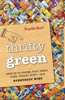 In Thrifty Green, Priscilla Short offers a unique, resource-by-resource approach that shows us that the best way to practice conservation, the real win-win, involves saving money as we lighten up. However, Thrifty Green is much more than a how-to book. It is a conscientious guide to the art of going green that includes a wealth of terrific tips, fun facts, and straightforward strategies that will make you think about conservation in a whole new way.
Click here for more info. and/or to order this book on Amazon.
About the Author

Priscilla Short holds a Bachelor of Arts from Wellesley College in mathematics and a Master of Science from The College of William and Mary in operations research. She spent over a decade in the corporate world working as a systems engineer developing software to optimize the resource usage of government satellite systems. She lives in Colorado. Photo credit: Heather Wagner.